
Skip to content

6 Salesforce Data Quality Tools Compared for 2026

6 Salesforce Data Quality Tools Compared for 2026

  • Data quality
  • Salesforce
  • Deduplication

For a Salesforce-only org that wants deduplication, validation, and prevention working together without middleware, a native tool — Plauti, DataGroomr, or Cloudingo — is the more direct route. For a data program that already spans several systems beyond Salesforce, a broader MDM platform like Informatica or Reltio may fit an existing investment better. Checked June 2026, the article's last update.
Illustration of interconnected cloud icons in a data center, representing linked Salesforce records across systems.

Six Salesforce data quality tools, compared

If you're choosing a data quality tool for Salesforce in 2026, six names come up most often: DataGroomr, Plauti, Cloudingo, ZoomInfo OperationsOS, Informatica Cloud MDM, and Reltio Connected Customer 360. This roundup lines up what each one actually does — deduplication, validation, formatting, and duplicate prevention — so you can see which fits your setup.

  1. DataGroomr
  2. Plauti
  3. Cloudingo
  4. ZoomInfo OperationsOS
  5. Informatica Cloud MDM Customer 360 for Salesforce
  6. Reltio Connected Customer 360

First published: January 16, 2025. Updated: June 15, 2026.

1. DataGroomr

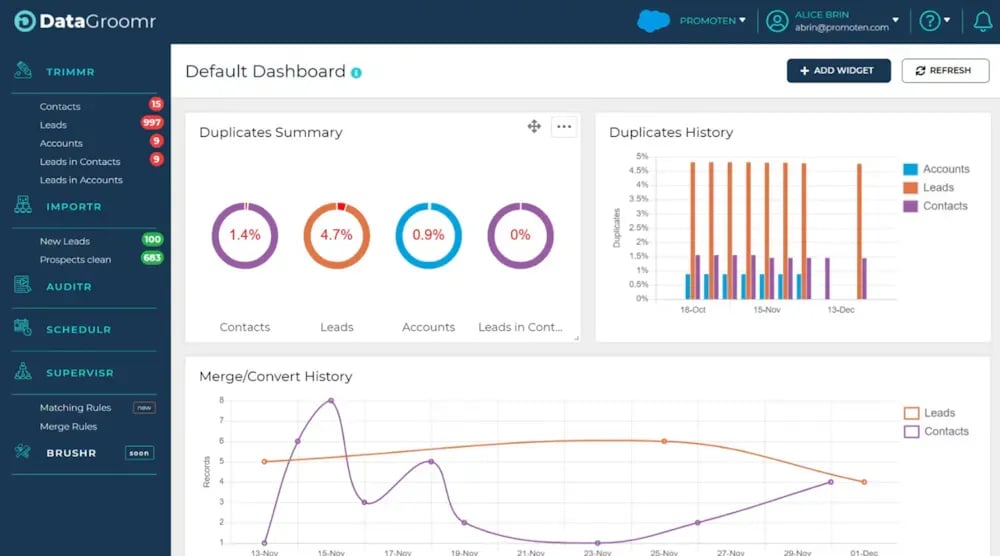
DataGroomr is a machine-learning-based data quality tool for Salesforce, built around a model that scores and cleans records without manual matching rules.
Features and benefits

  • Machine learning deduplication: Finds and removes duplicates without manual filters or matching criteria, and runs a broader data quality analysis across the org.
  • Real-time duplicate visibility: A Lightning component shows duplicates directly on a record page, so users see them without leaving the record.
  • Undo: Merges can be reversed immediately, or later from the "Auditr" module, if the wrong records get merged.
  • Contact verification: Verifies and corrects email addresses, phone numbers, and mailing addresses.
  • Standardization: Applies formatting rules to existing data or at the point of import.
  • Bulk cleanup: The "Brushr" tool finds and removes outdated or invalid records in bulk.
  • Duplicate prevention: Blocks duplicate records at import, before they reach Salesforce.

2. Cloudingo

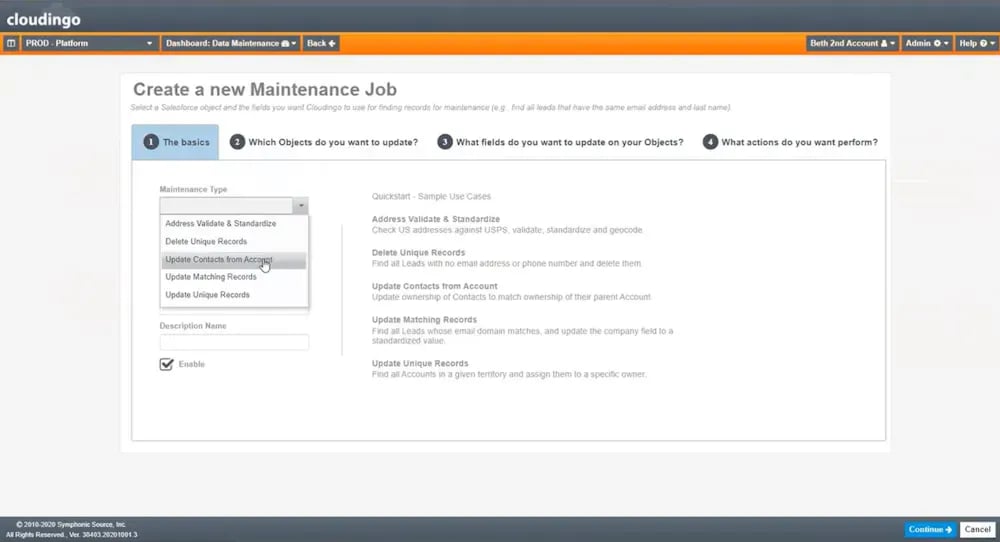
Cloudingo is a Salesforce-native data management tool built around bulk record actions: converting, deduplicating, and reassigning records at scale.
Features and benefits

  • Lead conversion: Converts leads to contacts or accounts, individually or in bulk.
  • Assign and reassign: Changes record ownership per record or in bulk.
  • Deduplication: Removes duplicate records already in the org.
  • Duplicate prevention: Blocks poor data at the point of entry.
  • Undo: Merges can be undone, restoring the record along with its relationships, metadata, lookups, and attachments — something not every tool offers.
  • Automation: Cleansing jobs can run on a schedule, such as a nightly or weekly deduplication pass.

3. Plauti

Plauti covers the Salesforce data lifecycle end to end: monitor data health, clean up what's already wrong, prevent bad data at the point of entry, and act on records you can trust. It's built natively for Salesforce, so there's no middleware or external database to stand up before it works.
Features and benefits

  • Monitor: A health score, alerts, and a running record of data health flag problems as they appear and document what changed, rather than waiting for a scheduled report.
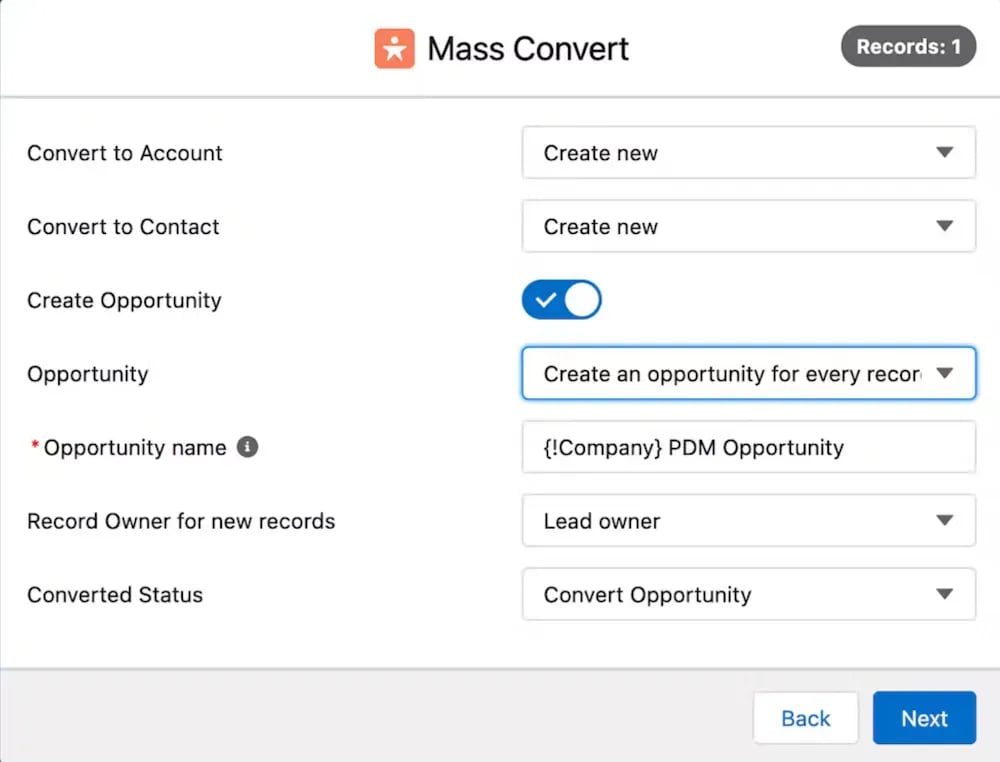
  • Clean: Find and merge duplicate leads, contacts, and accounts, with bulk actions for updating, deleting, assigning tasks, and converting leads from one screen.
  • Prevent: Real-time alerts warn a user about possible duplicates while they're entering a record, with bulk prevention rules for imports and integrations.
  • Act: Automate cleansing routines on a schedule — a duplicate check every Monday morning, for example — so sales teams start the week with trustworthy data. Records can also be routed and assigned automatically once they pass validation.
  • Verify and standardize: Corrects and standardizes phone numbers, email addresses, and mailing addresses.
  • Large data volumes: Processes jobs from a few thousand records up to several million.
  • Granular access: Cleansing privileges can be scoped down to the individual user; a user can flag a record for merge and leave the actual merge to an admin.
  • Processing options: Jobs can run on a local machine, natively inside Salesforce, or offloaded to the cloud for larger jobs.
  • Custom workflows: Actions and flows can be saved and reused.

4. ZoomInfo OperationsOS

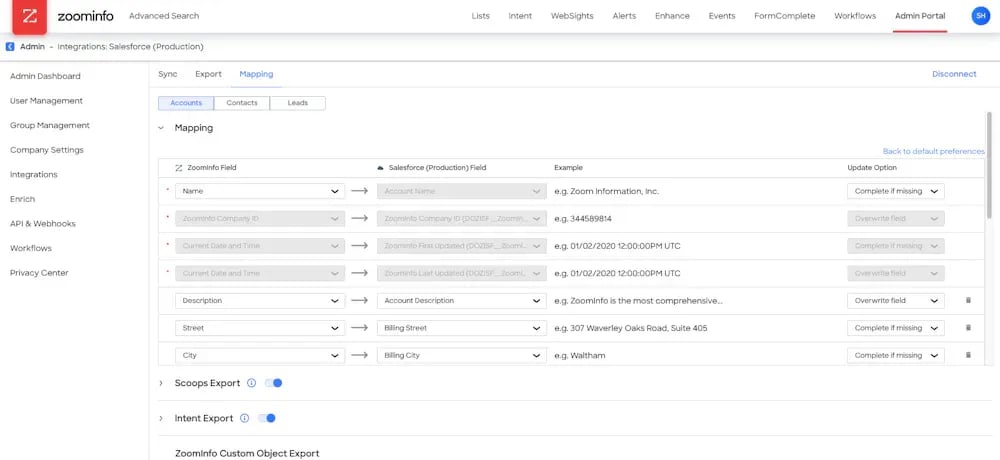
OperationsOS is ZoomInfo's data management layer, built to clean Salesforce records and enrich them with ZoomInfo's own data.
Features and benefits

  • Deduplication: Removes duplicate records as a first step in data hygiene.
  • Duplicate prevention: Blocks poor data at the point of entry.
  • Standardization: Normalizes phone numbers, company names, and ISO codes.
  • Automation: Auto-cleanses incoming data from list imports, digital forms, and manual entry, and can run tasks like deduplication, formatting fixes, and validation on a schedule.
  • Data enrichment: Adds ZoomInfo data and third-party data sources to existing records.
  • Data integration: Connects to CRM systems, marketing automation platforms, and other databases to keep data centralized and current.

5. Informatica Cloud MDM Customer 360 for Salesforce

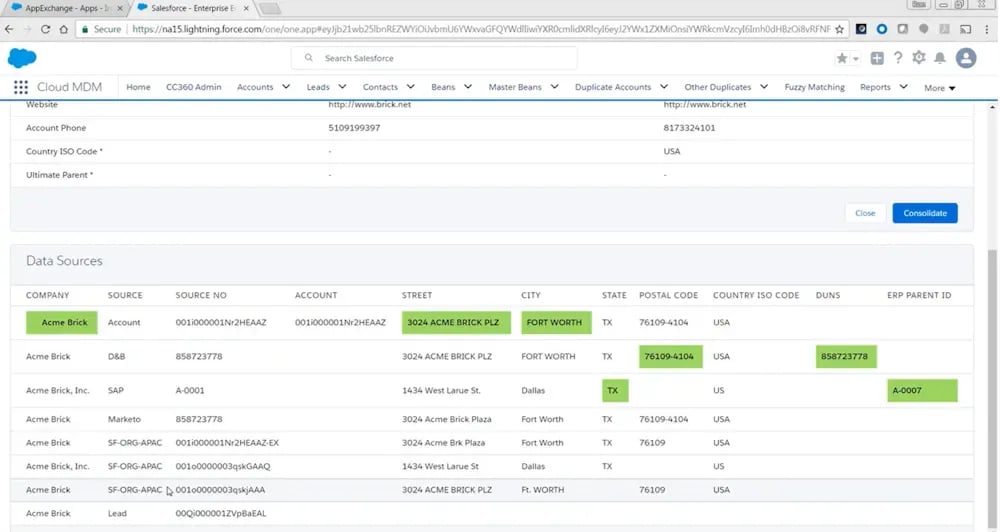
Informatica's master data management platform is widely used outside Salesforce as well as inside it. Because it isn't Salesforce-native, integrating it involves more setup than a native tool.
Features and benefits

  • Data enrichment: Adds contact information, credit scores, and other third-party data to records.
  • Verification and validation: Verifies, validates, and cleanses customer data.
  • Deduplication: Clears duplicate records from the database.
  • Duplicate prevention: Blocks duplicate data at entry, using fuzzy matching across accounts, leads, and customer objects.
  • Data governance: Lets admins apply governance policies for security and regulatory compliance.
  • Match and merge: Matches and merges records from multiple data sources, either automatically or with manual review.
  • Cross-source view: Tracks the same record across an organization's different data sources for a fuller view of each customer.

6. Reltio Connected Customer 360

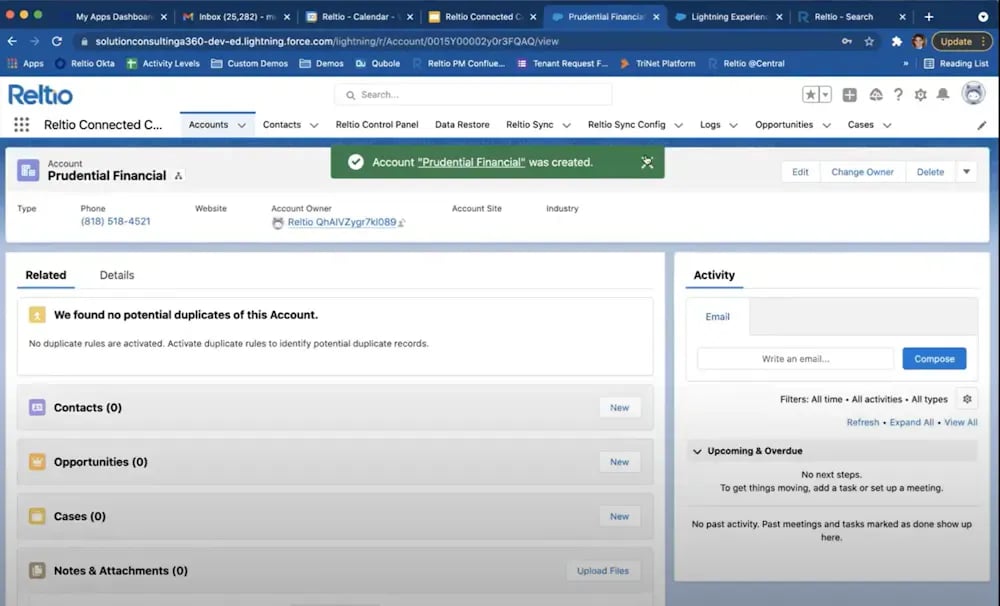
Reltio Connected Customer 360 is a cloud MDM platform that connects to Salesforce rather than running inside it, so integration takes more setup than with a native tool.
Features and benefits

  • Cleansing and standardization: Cleans and standardizes Salesforce data to keep a single, consistent source of truth.
  • Real-time data quality checks: Flags accuracy issues as they happen — though if an org pulls from several outside sources, a change made elsewhere may take time to show up in Salesforce.
  • Match and merge: Links records from different systems into one view, cutting down on redundant data.
  • Duplicate monitoring: Finds and flags duplicate records in Salesforce, but doesn't merge them there directly — a separate step is needed to fix what it finds.

Which Salesforce data quality tool should you choose?

Pick based on where your data actually lives. If everything runs inside Salesforce, a native tool like DataGroomr, Cloudingo, or Plauti gets you running faster with less setup. If you're managing data across many systems beyond Salesforce, a broader MDM platform like Informatica or Reltio may already fit an existing program.

A handful of vendors sell a bundle of separate point solutions and call it a suite. Bundling isn't the same as integration: a true multi-part platform is built so its parts share data and work together from the start, not stitched together afterward.

Non-native tools carry a cost the vendor page won't spell out: getting them talking to Salesforce takes technical work, and that costs time and budget before the tool does anything for your data. A platform that builds its "customer 360" view by pulling from several outside sources can also show stale data in the gap between updates — a single system of record avoids that gap entirely.

Plauti is built for Salesforce from the start, which is what lets its stages work together: validating a new record and checking it against what's already in Salesforce happens in the same step, not two separate tools bolted together after the fact.

Hungry for more?

Ready to take control?

With a product tour you can walk through the product yourself without installing anything, or book a demo for a guided look.