
Guides
Native vs. Non-Native Salesforce Data Quality Tools
How to tell whether a Salesforce app is actually native, what that buys you in security and speed, and how to get more out of one once you've picked it.


As this guide heads into its final chapters, one thing should be clear by now: data quality has a real, measurable effect on how a business performs. Poor data quality touches every department, in wasted time and wasted resources.
This chapter puts a number on that. Clean data isn't a matter of taste — it saves time and money in ways that are easy to demonstrate, and this chapter shows the math.
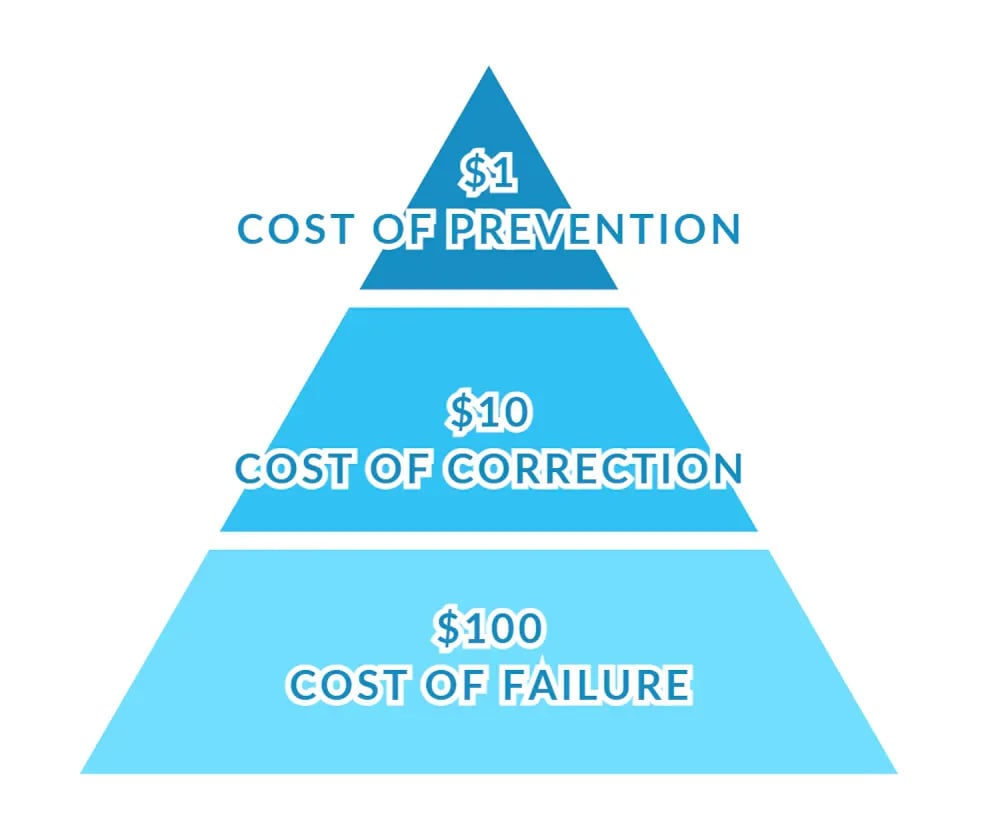
The 1-10-100 rule is one of the most cited frameworks in data management: it costs $1 per record to prevent a data quality problem, $10 per record to clean and deduplicate it later, and $100 per record if nothing is done and it has to be fixed after the fact. The lesson is straightforward — the longer bad data quality goes unaddressed, the more expensive it gets to fix.
Beyond the dollar figures, poor data quality carries costs that are harder to see: time lost calling a wrong phone number, or the drag it puts on marketing campaigns, sales intelligence, and forecasting. A bounced email or one duplicate record looks minor in isolation, but the effect compounds over time.
A loyal, paying customer is worth protecting — once you've won them over, keeping them happy keeps them coming back. Temkin Group's research puts a number on that: companies generating $1 billion annually can expect an average additional $700 million in revenue within three years of investing in customer experience. For SaaS companies specifically, that figure can approach $1 billion — nearly doubling revenue in three years from customer experience investment alone.
Where does that revenue come from? Research from PWC shows that a positive customer experience increases spending: 86% of buyers say they're willing to pay a premium for a better experience, and the willingness to pay increases with the size of the purchase. Customers report being willing to pay a premium of up to 13% — and in some cases as high as 18% — for a strong customer experience, and 49% of buyers who make impulsive purchases do so after a personalized experience.
A great customer experience depends on many parts of an organization working together, but personalization is the core of it — and personalization depends on handling customer information carefully. Get a customer's name wrong, or pitch them something they already bought, and there's a real chance they take their business elsewhere.
Plauti built an ROI calculator using industry benchmarks to put a number on specific data quality problems — starting with what duplicates cost, and what fixing them is worth.
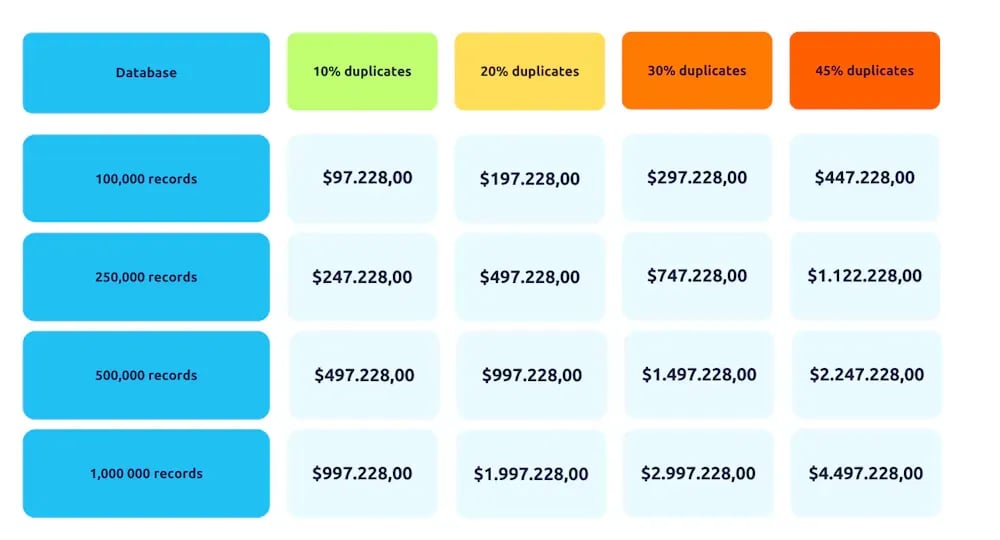
Estimates of duplicate rates in CRM data range from 20% to as much as 50% of records, with an industry benchmark of 10% to 30%. Assume 20% for this example.
Take a Salesforce org with 100,000 records. At 20% duplicates, that's 20,000 duplicate records. Addressing that with a premium deduplication bundle sized for 100K+ records, at $231 per month for 12 months, costs $2,772 total. At $10 per record to clean later — the middle tier of the 1-10-100 rule — doing nothing would cost roughly $200,000. Cleaning up and preventing future duplicates for $2,772 instead means a potential saving of $197,228.
The lesson across this chapter is simple: waiting on data quality means the cost keeps compounding. The sooner a company puts a real data strategy in place, the sooner it stops paying the price of delay.
One chapter remains. Data quality problems don't stay contained to your own Salesforce org — the wider Salesforce community has spent years building resources for exactly this kind of work, and the next chapter rounds up the best of them.
Guides
How to tell whether a Salesforce app is actually native, what that buys you in security and speed, and how to get more out of one once you've picked it.
Guides
Seven recurring problems in Salesforce data management, from duplicate records to thin reporting, and why the AppExchange is where most teams go next.
It costs $1 per record to prevent poor data quality, $10 per record to clean and deduplicate it later, and $100 per record if the problem is left until it has to be fixed after the fact. The rule illustrates how the cost of addressing data quality rises the longer it's ignored.
Incorrect customer information leads to poor interactions and a worse customer experience. Temkin Group research found that companies investing in better customer experience can expect an average additional $700 million in revenue within three years, with SaaS companies seeing even larger gains.
In a worked example with a 100,000-record Salesforce org and a 20% duplicate rate, addressing 20,000 duplicates with a premium deduplication bundle costing $2,772 avoided an estimated $200,000 in later cleanup costs — a potential saving of about $197,228.
Native integration with Salesforce, scalability for your data volume, real data cleansing and validation features, customization to match your workflows, useful reporting and analytics, strong security and compliance, an interface people will actually use, and a clear return on cost.
With a product tour you can walk through the product yourself without installing anything, or book a demo for a guided look.