
Guides
How AI Is Changing Sales, Marketing, and RevOps
ChatGPT's rise pushed AI into mainstream business use almost overnight. Here's its early impact on sales forecasting, marketing personalization, and revenue operations.

Poor data does real damage — that's the easy half of this story. This chapter flips the lens: what changes, concretely, once your CRM data is clean.

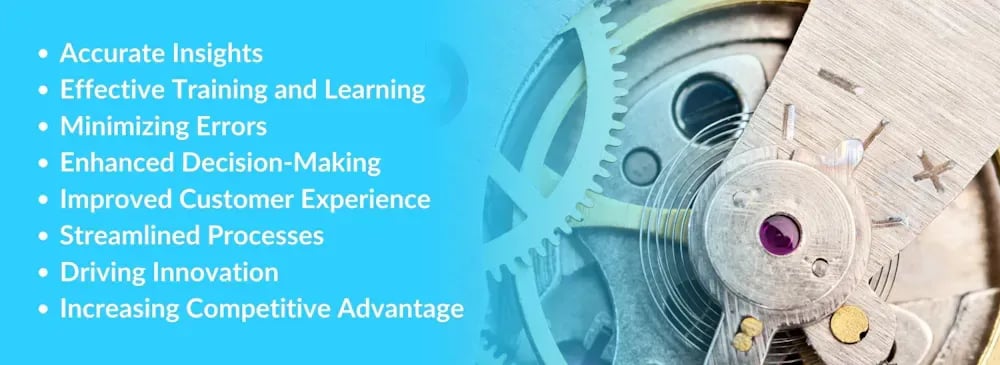
Clean CRM data changes eight concrete things: forecast accuracy, how well AI models learn, how many errors slip through, decision quality, customer experience, process speed, capacity for innovation, and competitive position. Each one traces back to the same input — data deduplication chief among the fixes that make it possible.
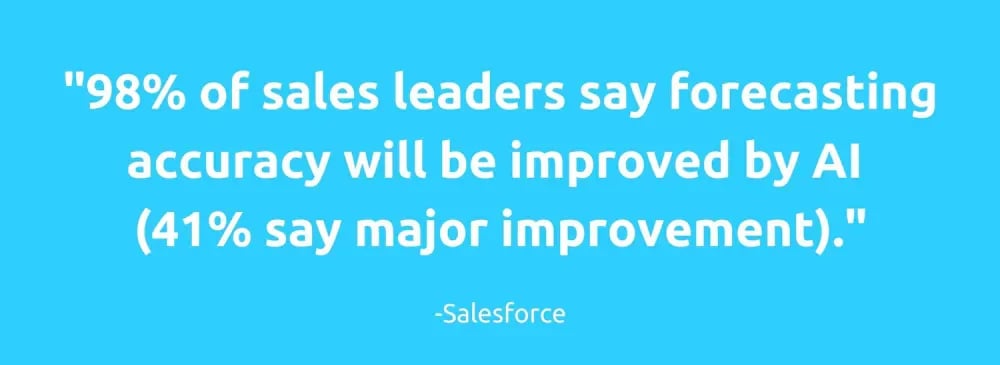
A sales team running AI-powered forecasts on clean CRM data gets measurably better predictions for the next quarter. According to Salesforce, 98% of sales leaders say forecasting accuracy will be improved by AI, with 41% expecting a major improvement. Clean data is what lets an AI model discern real patterns in historical data, market trends, and customer behavior instead of noise — which is what lets a team prioritize the right leads and the right opportunities with confidence.
Think of an AI model as a student, and its training data as its textbook. A model trained on clean medical records, for example, can support accurate diagnoses and treatment recommendations. The same model trained on records with errors in treatment guidelines and outcomes makes mistakes that carry real consequences for patients. Clean data is what makes the model's education dependable in the first place.
Deduplication is the fix behind most of this chapter. Take a marketing campaign built on customer data pulled from a CRM like Salesforce: duplicate or inconsistent records can get a customer misclassified as high-value when they're not, which wastes spend and erodes the trust the campaign was supposed to build. Data quality matters enough to marketers directly — 63% say trusted customer data is important for using generative AI successfully. Deduplication removes the duplicate records causing that misclassification in the first place.
A business executive navigating a merger relies on AI-driven analytics to guide each step, and the accuracy of that guidance depends entirely on the data behind it — how well it's been maintained, how much of it is duplicated or wrong. Clean data lets that executive trust the trends and opportunities the analysis surfaces. Dirty data produces guidance built on the same unstated assumptions the executive was trying to avoid.
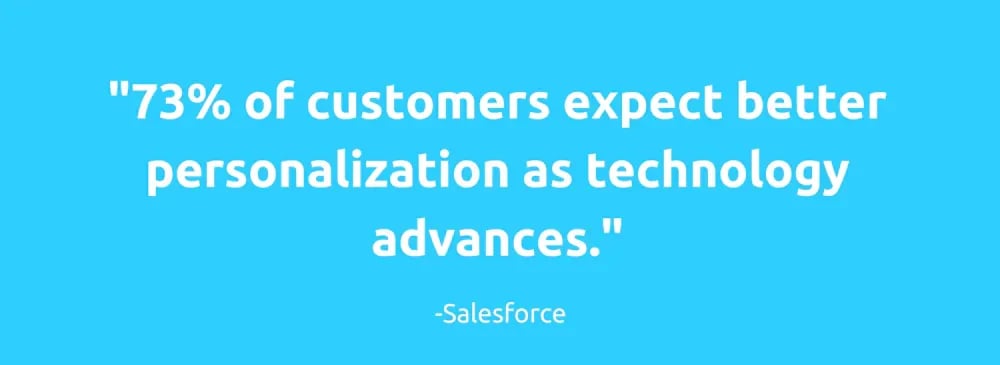
Personalization is only as good as the data behind it. According to Salesforce, 73% of customers expect better personalization as technology advances. An e-commerce platform recommending products with AI needs accurate, current data on each customer's preferences — price range, product type, brand — to get those recommendations right. Cluttered or outdated data produces irrelevant recommendations, and irrelevant recommendations cost sales, not just satisfaction.
Clean data is what lets an AI-powered support chatbot actually help a customer instead of running them in circles. A bot working from comprehensive, accurate knowledge about the organization resolves more requests on its own and hands off the rest cleanly, which cuts response times without leaving customers stuck talking to a machine that doesn't have the answer.
Confidence to experiment with new AI applications depends on trusting the data behind them. In the automotive industry, for instance, developing self-driving cars depends on sensor and camera data that's accurate and consistent enough to support split-second decisions. Clean data is the precondition for that kind of experimentation, not a footnote to it.
AI-powered initiatives are more likely to produce accurate results when the data behind them is clean, and that reliability compounds into a real edge over time. Clean data is often the difference between an AI initiative that delivers a modest improvement and one that delivers a genuine result — and in a market where every advantage counts, that gap matters.
Deduplication and AI reinforce each other directly. Removing duplicates and inconsistencies is what gives an AI system a reliable foundation to build on, and a clean foundation is what makes the AI's output trustworthy enough to act on. In finance, for example, algorithmic trading depends on stock data with zero duplicates or discrepancies — a mistake there isn't a minor inconvenience, it's a financial loss. Deduplication is the mechanism that keeps that foundation intact.


Clean data isn't a one-time project. Deduplication is a cornerstone of ongoing data management, and it's what keeps a personalized customer experience from degrading as new records come in. The synergy between deduplication and AI is what sustains the outcomes covered in this chapter — not a single cleanup, but a habit.
Next, we look at how Salesforce specifically builds AI into its platform, and what that means for the data-quality question raised throughout this chapter.
Guides
ChatGPT's rise pushed AI into mainstream business use almost overnight. Here's its early impact on sales forecasting, marketing personalization, and revenue operations.
Guides
Salesforce ships AI across sales, service, and marketing — Einstein Analytics, Copilot for Sales, GPT-drafted emails, call summaries. Every one of them runs on the CRM data underneath it.
Clean data turns AI from a guessing game into a reliable tool: sales teams get forecasts they can act on, and decisions across the business get measurably more accurate.
Deduplication removes duplicate and inconsistent CRM records before they can mislead an AI model, which prevents misguided marketing spend and keeps customer trust intact.
Clean data makes AI-driven analytics accurate enough to trust, which lets business leaders make informed decisions in high-stakes situations like a merger instead of decisions built on assumptions.
Clean data is what makes personalization work: it lets an e-commerce platform or service team recommend the right products or answers to the right customer, which increases satisfaction and sales.
Clean data gives businesses the confidence to experiment with new AI applications, since they can trust the results. That reliability compounds into a real edge over competitors relying on unreliable data.
With a product tour you can walk through the product yourself without installing anything, or book a demo for a guided look.