Clean: what does fixing Salesforce data actually involve?
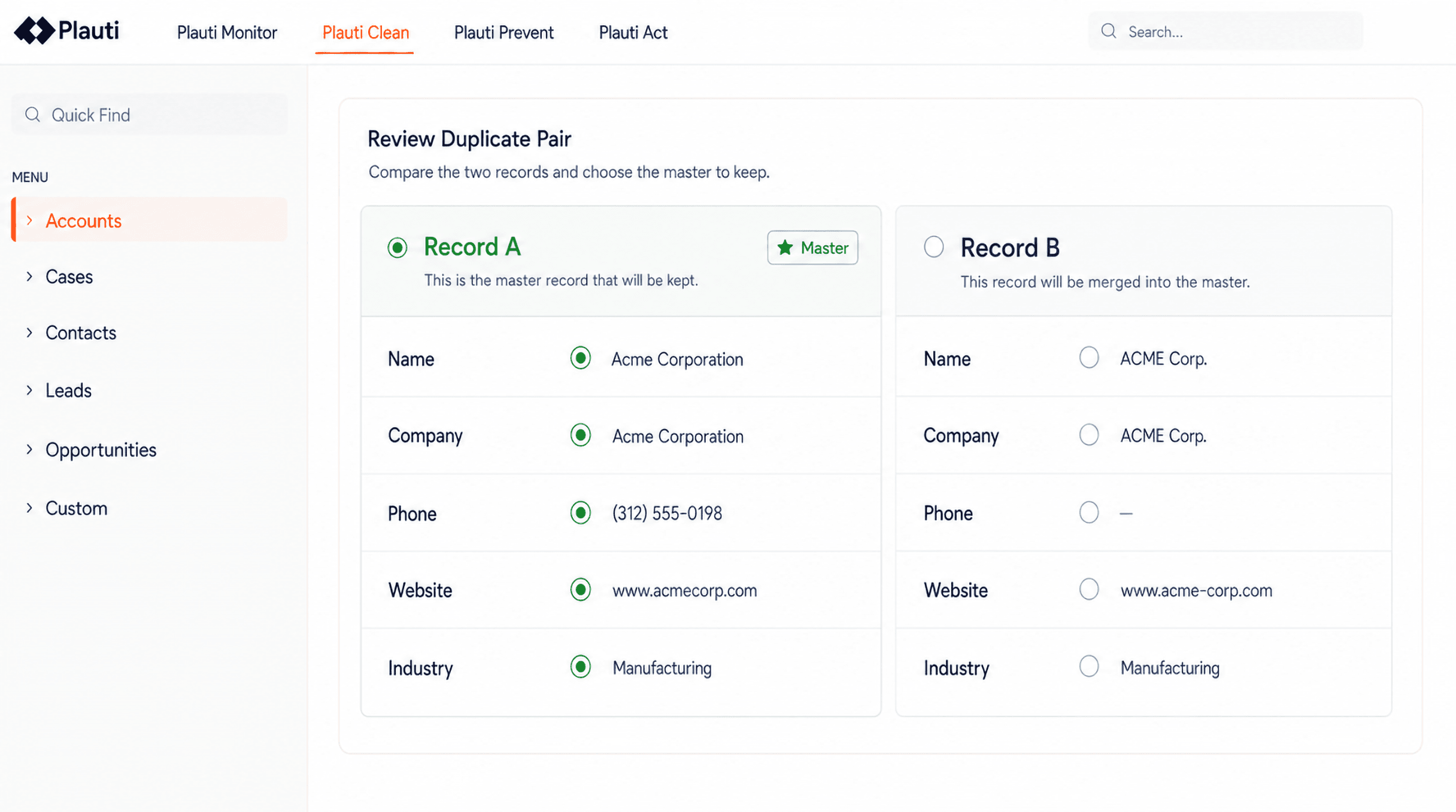
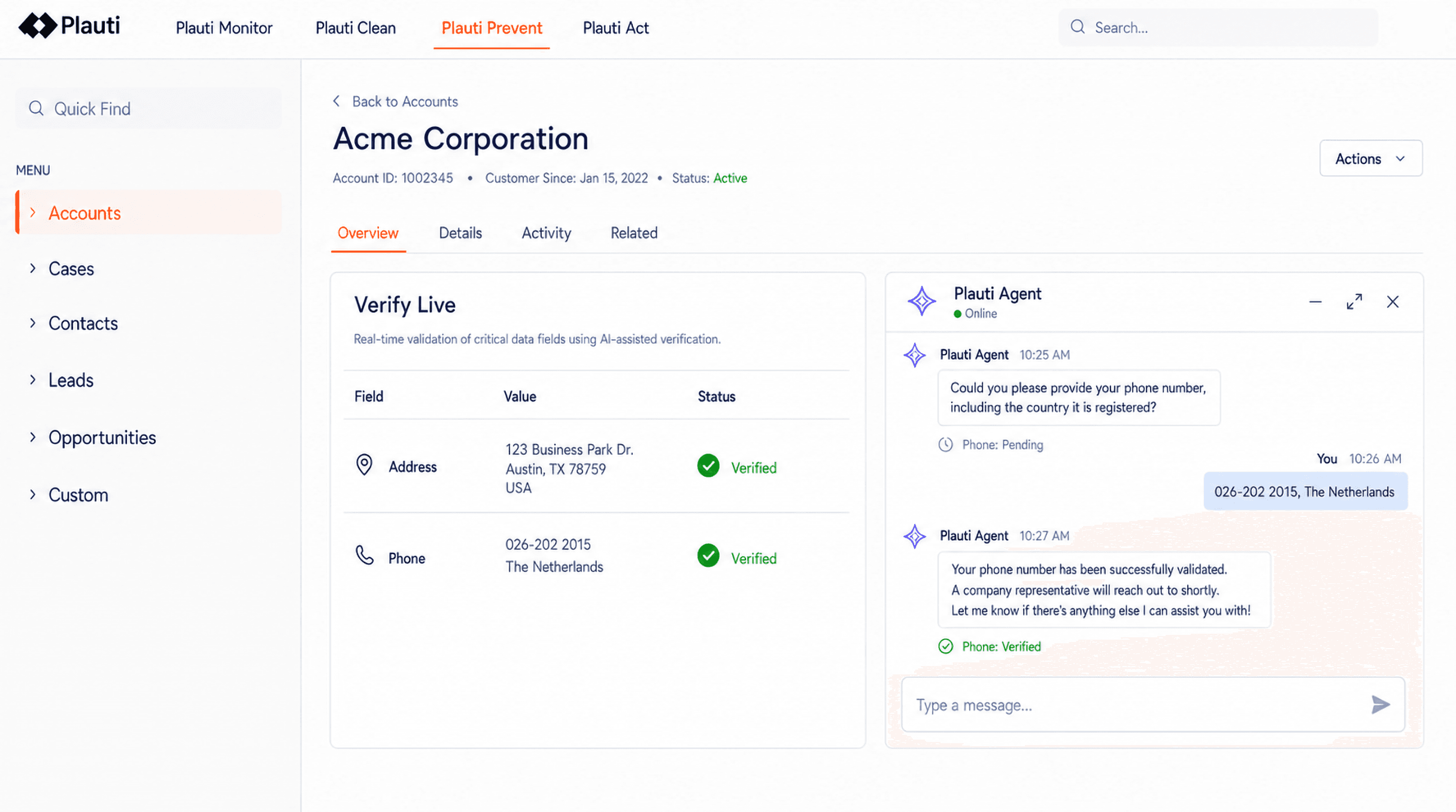
Clean is where duplicates get found and merged, contact data gets verified, and fields get standardized, at the scale of a full Salesforce org rather than one record at a time. Find and merge duplicates runs matching - exact, fuzzy, synonym, cross-object - across standard and custom objects. Verifying CRM data is the action that gets a contact record to a healthy state: it validates email addresses with syntax, DNS and mailbox checks, and validates and formats phone numbers to the standard you choose, and validates addresses, suggesting exact or similar matches. Standardize fields applies bulk updates, ownership changes, and find-and-replace across whatever a report or list view returns
Wedgewood Weddings, a US wedding-venue company, used to spend about 5 minutes manually merging each duplicate lead: comparing records, copying fields across, re-parenting related records by hand. After moving that work into Salesforce-native merging and verification, a merge takes about 20 seconds, a 93% cut in merge time. The freed-up contact center capacity let agents handle 25% more venues each, and the company booked a record 575 tours in a single day, up 28% year over year.
Robin Hood Foundation faced a bigger backlog: 220,000+ contact and account records built up over more than 10 years in Salesforce, with about 2,600 duplicate pairs identified, nearly all at a 95%+ match score. The team merged 54.9% of those pairs, about 1,427, in two weeks, saving 713 hours of manual work. "The system is only as good as the data that is in our system," says Hao Lyu, the foundation's Director of Business Intelligence.