
Guides
6 Steps to Implement a New Martech Tool
Choosing a SaaS tool is half the job. This chapter covers implementing it: standardizing processes first, protecting data quality through the migration, training staff, and testing before rollout.

Millions of SaaS tools are on the market, and every one of them claims to be the best. The real question isn't which tool wins industry awards — it's which tool fits your company's specific needs, budget, and existing stack. This chapter walks through how to evaluate that, from defining your requirements to comparing your shortlist.

Companies that delay adopting the right digital tools fall behind on efficiency, and bad data quality carries its own cost for the business regardless of which tools you pick.
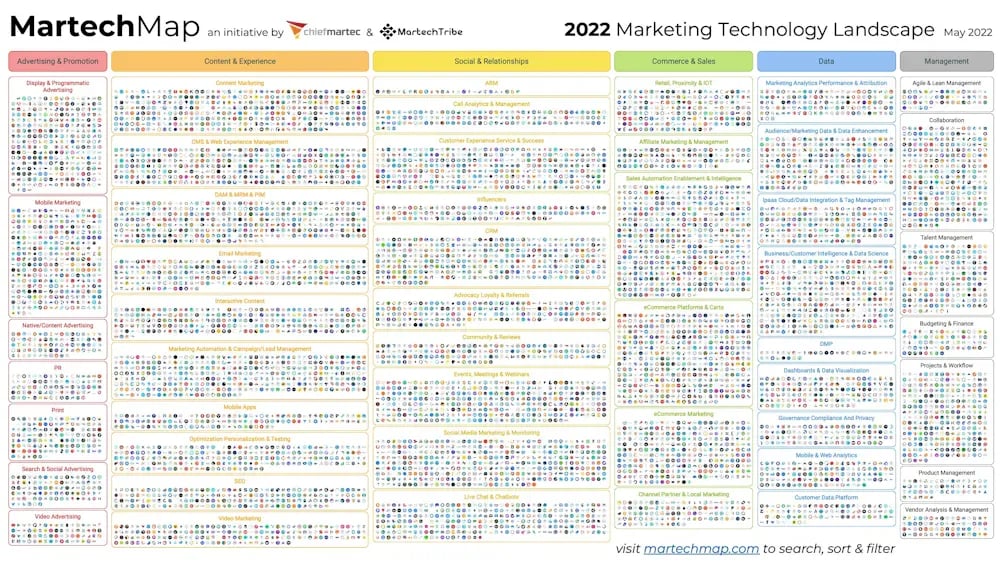
Given that many options, evaluating software takes real time and effort. Here's what to look at, starting with your own business requirements.

Before comparing tools, get clear answers on:
Data governance is how you manage the availability, usability, integrity, and security of company data against internal standards — the goal is data that's consistent and doesn't get misused. Any SaaS tool you adopt should support:
Security matters just as much. Verizon's 2021 Data Breach Investigations Report found that 73% of worldwide data breaches involved cloud assets, and Tech Target's Enterprise Strategy Group reported that 60% of Salesforce users don't back up their own cloud data. Regulations like GDPR and HIPAA add their own requirements on top, and a cloud migration can quietly break compliance you thought you already had — check that whatever you adopt keeps you compliant, not just functional.

Three research channels cover most of what you need:
Once you've narrowed the list, check each finalist against:

Guides
Choosing a SaaS tool is half the job. This chapter covers implementing it: standardizing processes first, protecting data quality through the migration, training staff, and testing before rollout.
Guides
Ten metrics across sales, marketing, and customer success — from win rate to CLV — and why none of them mean anything if the data behind them is wrong.
Companies that hesitate to adopt digital tools risk falling behind on efficiency and losing competitiveness. Leveraging accurate data through digitalization also avoids the operational cost of working with bad data.
Consider your business needs, customer behavior, financial situation, business procurement, and revenue operations. Also define responsibilities, set short- and long-term goals, establish KPIs, and confirm the tool supports data governance, security, compliance, integration with your stack, and your budget.
Review reliable sites for customer feedback, search past the paid results for organic insight, and ask your own network for recommendations. Then check budget compatibility, integration with your existing stack, feature match against your actual requirements, and the ownership terms in the contract.
Data governance manages the availability, usability, integrity, and security of your data so it stays consistent and trustworthy. Security matters because moving to cloud-based tools introduces real risk — a 2021 Verizon report found 73% of data breaches involved cloud assets. Choosing a secure, compliant SaaS solution protects sensitive data and keeps you aligned with regulations like GDPR and HIPAA.
With a product tour you can walk through the product yourself without installing anything, or book a demo for a guided look.